


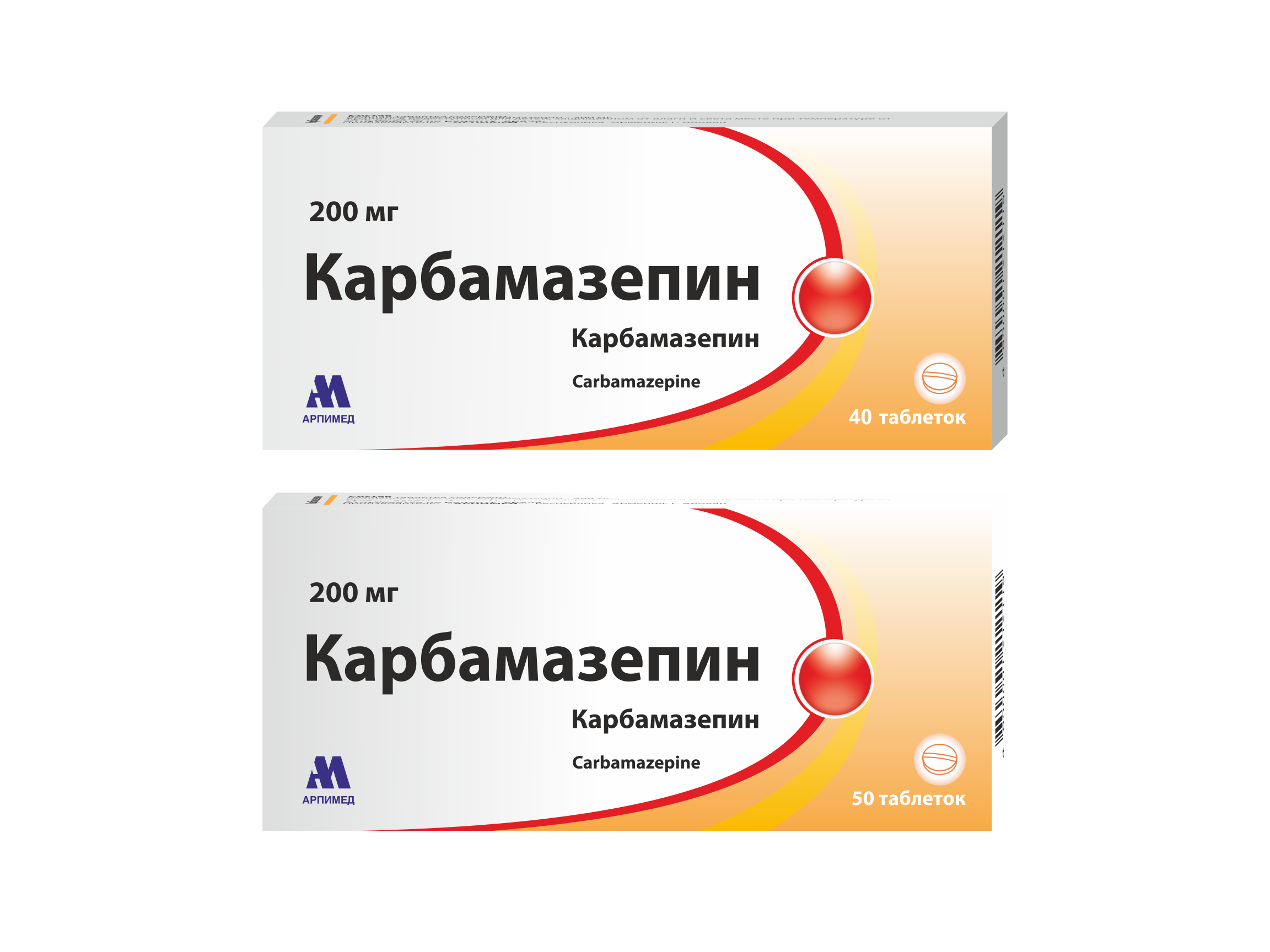
Each tablet contains 200 mg of Carbamazepine
For the full list of excipients, see section List of excipients.
Drug formTablets
ATC categoryNeurology. Psychiatry
ATC subcategoryAntiepileptics
Brand nameCarbamazepine
Generic nameCarbamazepine
Each tablet contains 200 mg of Carbamazepine
For the full list of excipients, see section List of excipients.
Carbamazepine is given orally, usually in two or three divided doses. Carbamazepine may be taken during, after or between meals, with a little liquid e.g., a glass of water. Before deciding to initiate treatment, patients of Han Chinese and Thai origin should whenever possible be screened for HLA- B*1502 as this allele strongly predicts the risk of severe Carbamazepine-associated Stevens-Johnson syndrome (see information on genetic testing and cutaneous reactions in section Special warnings and precautions for use).
Epilepsy:
The dose of Carbamazepine should be adjusted to the needs of the individual patient to achieve adequate control of seizures. Determination of plasma levels may help in establishing the optimum dosage. In the treatment of epilepsy, the dose of Carbamazepine usually requires total plasma-carbamazepine concentrations of about 4 to 12 micrograms/mL (17 to 50 micromoles/litre) (see warnings and precautions).
Adults: It is advised that with all formulations of Carbamazepine, a gradually increasing dosage scheme is used and this should be adjusted to suit the needs of the individual patient. Carbamazepine should be taken in a number of divided doses although initially 100- 200 mg once or twice daily is recommended. This may be followed by a slow increase until the best response is obtained, often 800-1200 mg daily. In some instances, 1600 mg or even 2000 mg daily may be necessary. Elderly: Due to the potential for drug interactions, the dosage of Carbamazepine should be selected with caution in elderly patients.
Children and adolescents: It is advised that with all formulations of Carbamazepine, a gradually increasing dosage scheme is used and this should be adjusted to suit the needs of the individual patient. Usual dosage 10-20 mg/kg bodyweight daily taken in several divided doses. Carbamazepine tablets are not recommended for very young children.
5-10 years: 400 to 600 mg daily (2-3 x 200 mg tablets per day, to be taken in divided doses).
10-15 years: 600 to 1000 mg daily (3-5 x 200 mg tablets per day, to be taken in several divided doses).
>15 years of age 800 to 1200mg daily (same as adult dose).
Maximum recommended dose
Up to 6 years of age: 35mg/kg/day 6-15 years of age: 1000mg/day
>15 years of age: 1200mg/day.
Wherever possible, anti-epileptic agents should be prescribed as the sole anti-epileptic agent but if used in polytherapy the same incremental dosage pattern is advised. When Carbamazepine is added to existing antiepileptic therapy, this should be done gradually while maintaining or, if necessary, adapting the dosage of the other antiepileptic(s) (see interaction with other medicaments and other forms of interaction).
Trigeminal neuralgia:
Slowly raise the initial dosage of 200-400mg daily until freedom from pain is achieved (normally at 200mg 3-4 times daily). In the majority of patients, a dosage of 200 mg 3 or 4 times a day is sufficient to maintain a pain free state. In some instances, doses of 1600 mg Carbamazepine daily may be needed. However, once the pain is in remission, the dosage should be gradually reduced to the lowest possible maintenance level. Maximum recommended dose is 1200 mg/day. When pain relief has been obtained, attempts should be made to gradually discontinue therapy, until another attack occurs.
Elderly:
Dosage in Trigeminal neuralgia
Due to drug interactions and different antiepileptic drug pharmacokinetics, the dosage of Carbamazepine should be selected with caution in elderly patients.
In elderly patients, an initial dose of 100 mg twice daily is recommended. The initial dosage of 100mg twice daily should be slowly raised daily until freedom from pain is achieved (normally at 200mg 3 to 4 times daily). The dosage should then be gradually reduced to the lowest possible maintenance level. Maximum recommended dose is 1200 mg/day. When pain relief has been obtained, attempts should be made to gradually discontinue therapy, until another attack occurs.
For the prophylaxis of manic-depressive psychosis in patients unresponsive to lithium therapy:
Initial starting dose of 400 mg daily, in divided doses, increasing gradually until symptoms are controlled or a total of 1600 mg given in divided doses is reached. The usual dosage range is 400-600 mg daily, given in divided doses.
Special populations
Renal impairment / Hepatic impairment
No data are available on the pharmacokinetics of Carbamazepine in patients with impaired hepatic or renal function.
Therapeutic class: Antiepileptics. Carboxamide derivatives. Carbamazepine.
ATC Code: N03AF01.
List of excipients
Carbamazepine Tablets:
Each tablet contains microcrystalline cellulose,
aerosil 200,
carmellose sodium,
magnesium stearate.
For more detailed information about the drug, click: http://pharm.cals.am/pharm/data/drug_134425/1736329537406.pdf